Hopefully nobody was holding out for the next episode after the cliffhanger ending of the tkey posts from 3 years ago. This one is just going to be some images of repairs I've done recently with some words added to remind me why they're in the gallery.
chair:
This is a reclining chair I've had for maybe 10 years. It had been holding up very well until earlier this year when 2 of the springs broke.
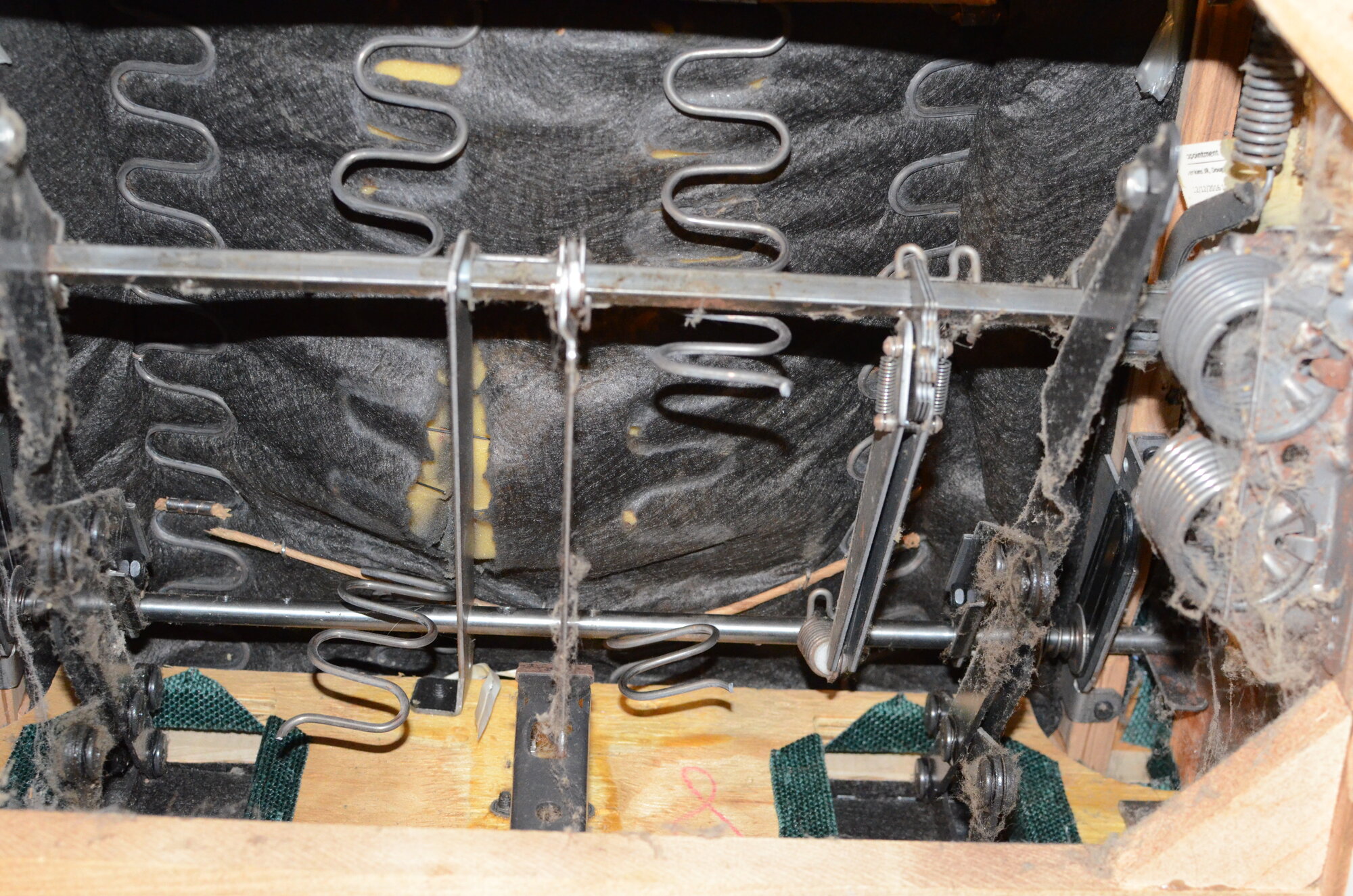
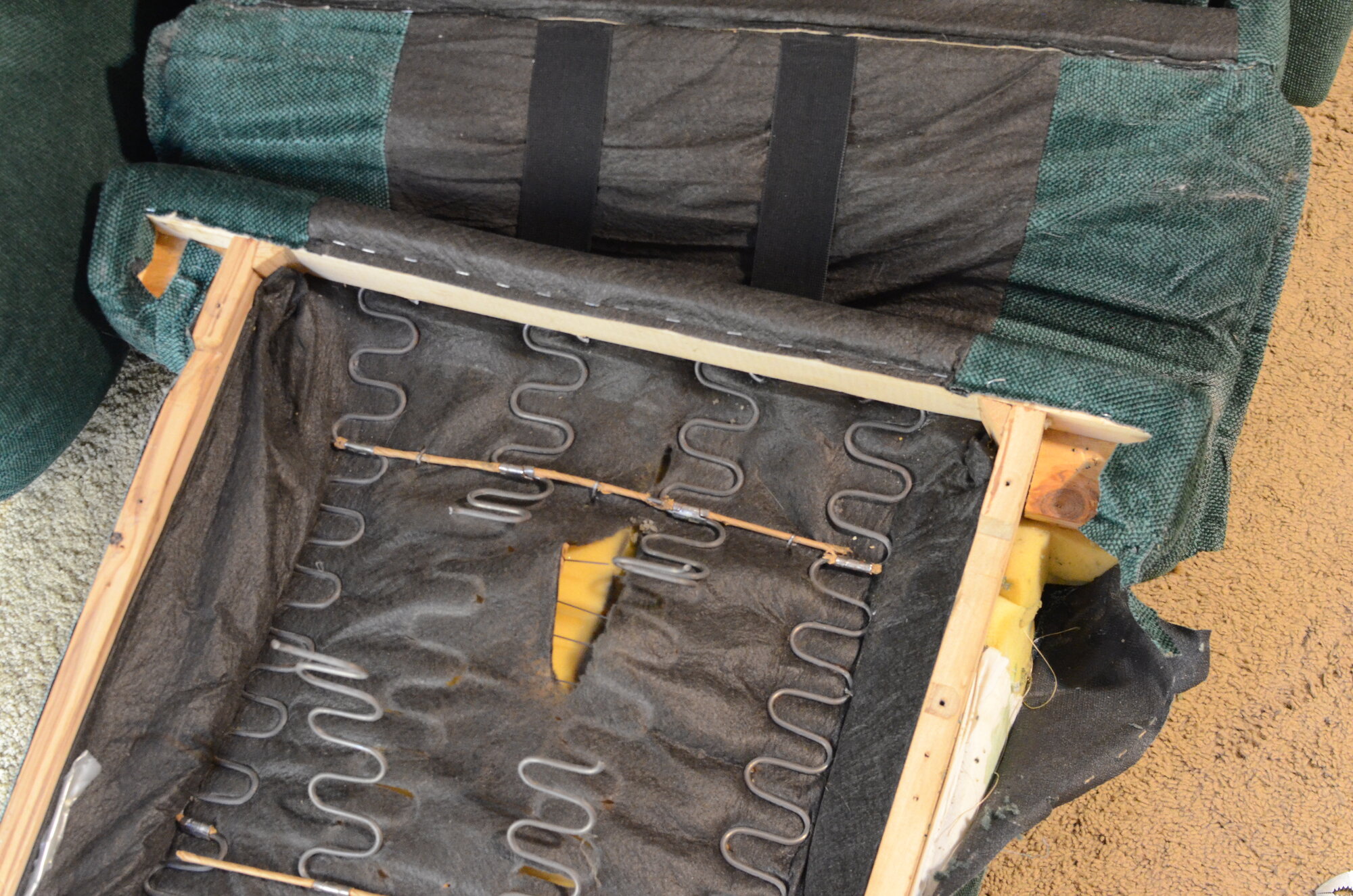
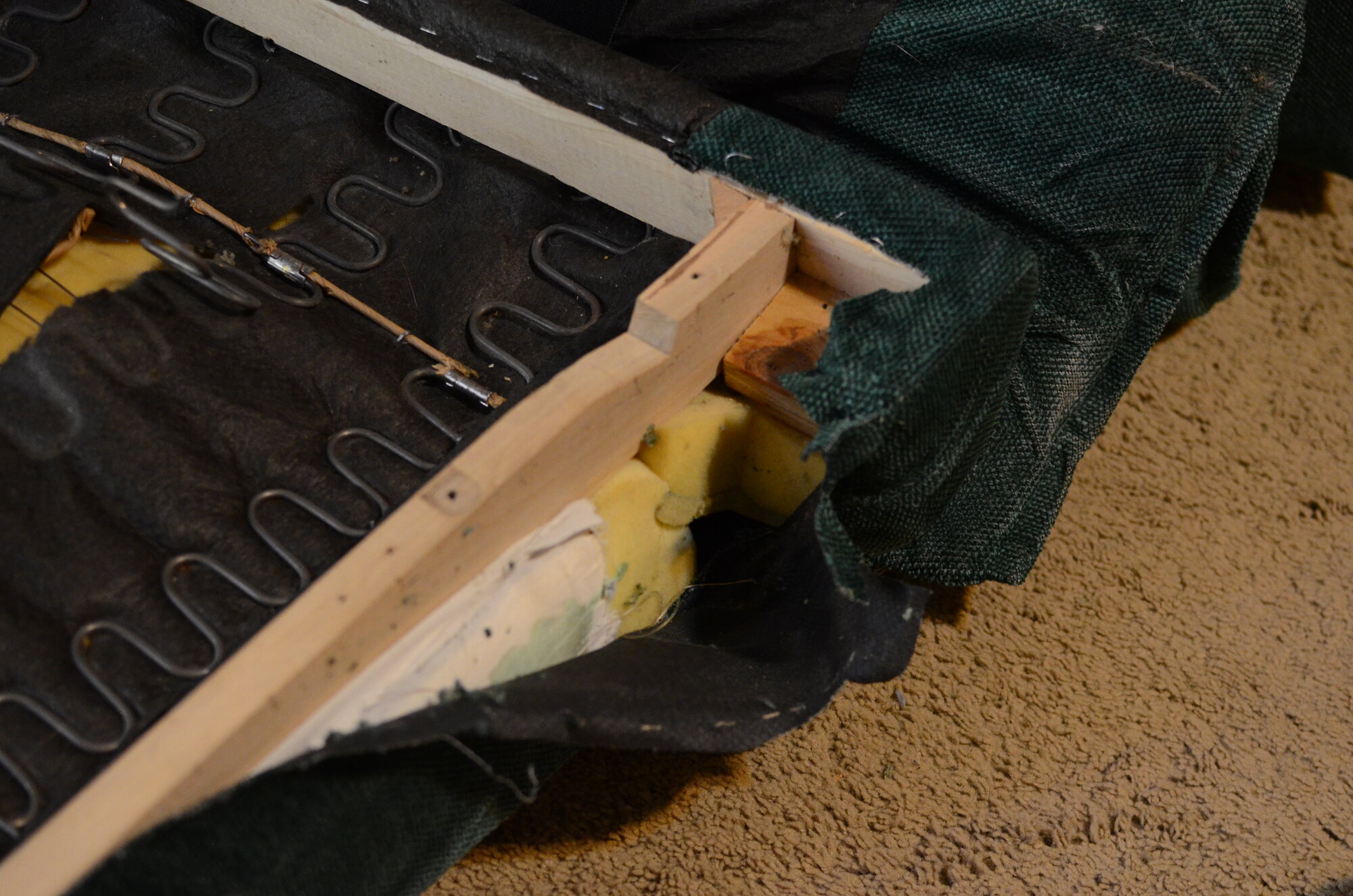
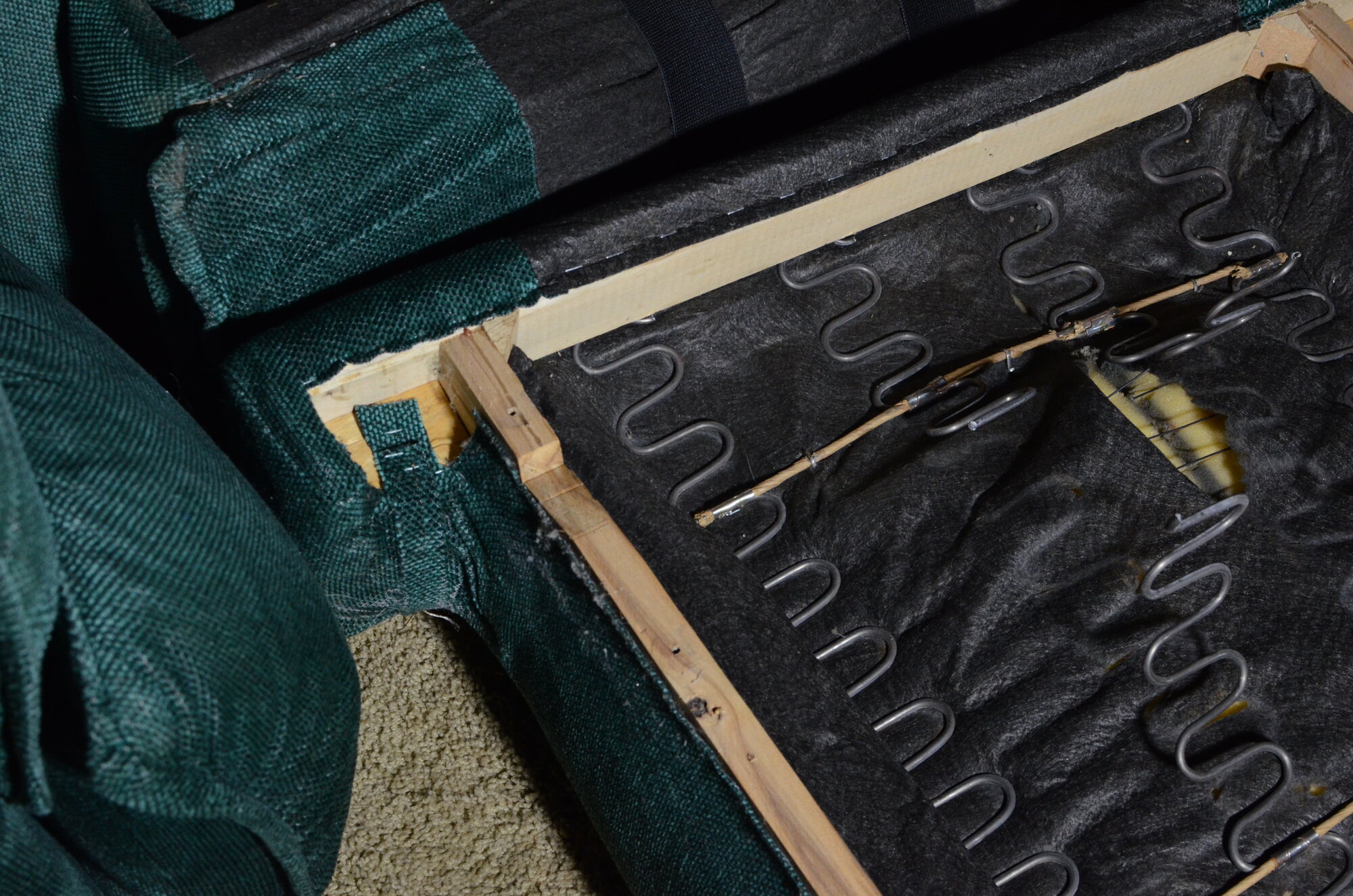
I don't know for sure what the cause was, but it happened around the same time this guy started gaining weight. You can see in the second picture where he was already so heavy he bent over the bushes in the back yard.


The correct size of replacement springs weren't available as a kit, which comes with the clips and supporting wire, so I got a longer set and had to cut it to length, and bent the ends over.
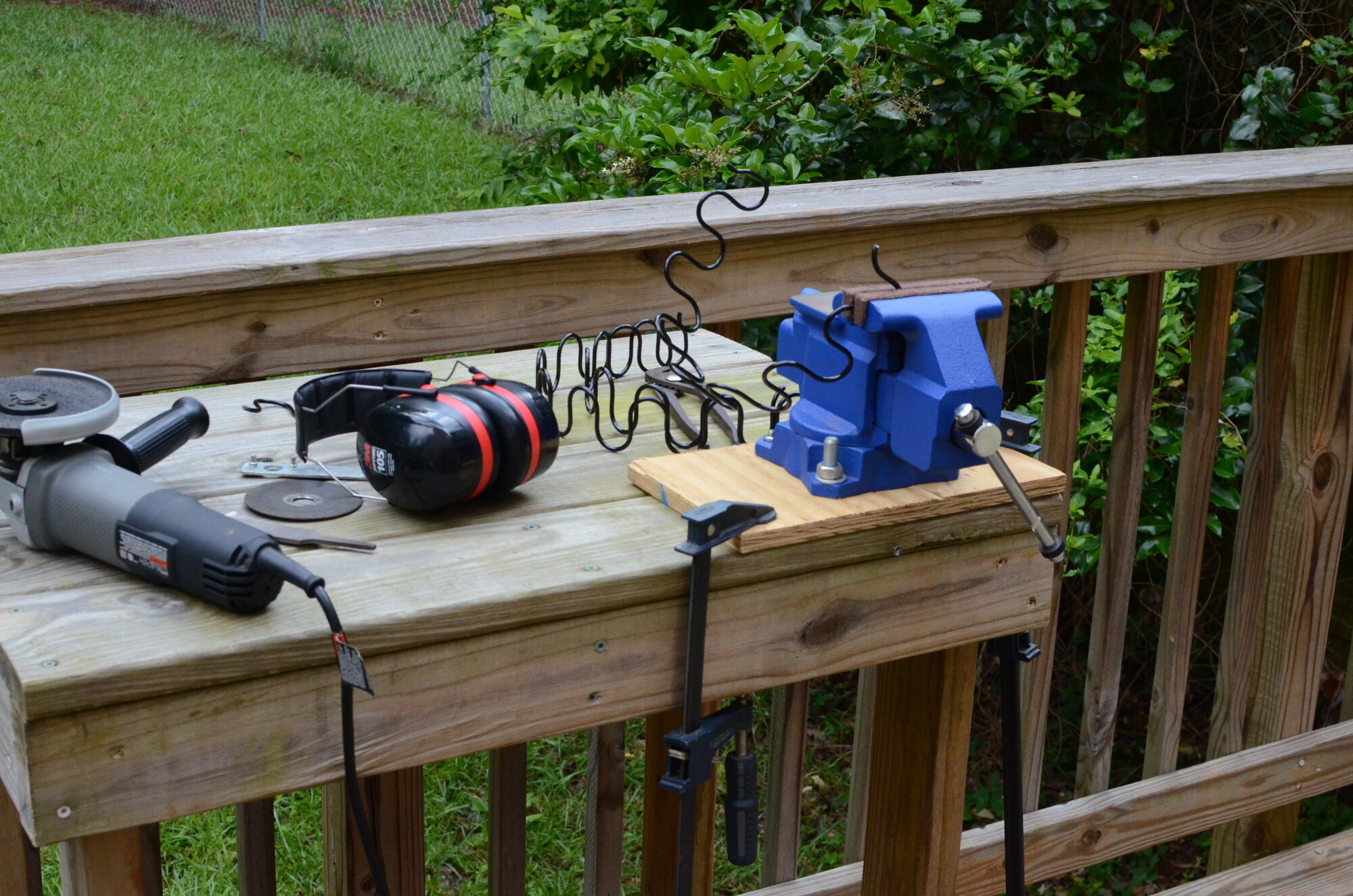
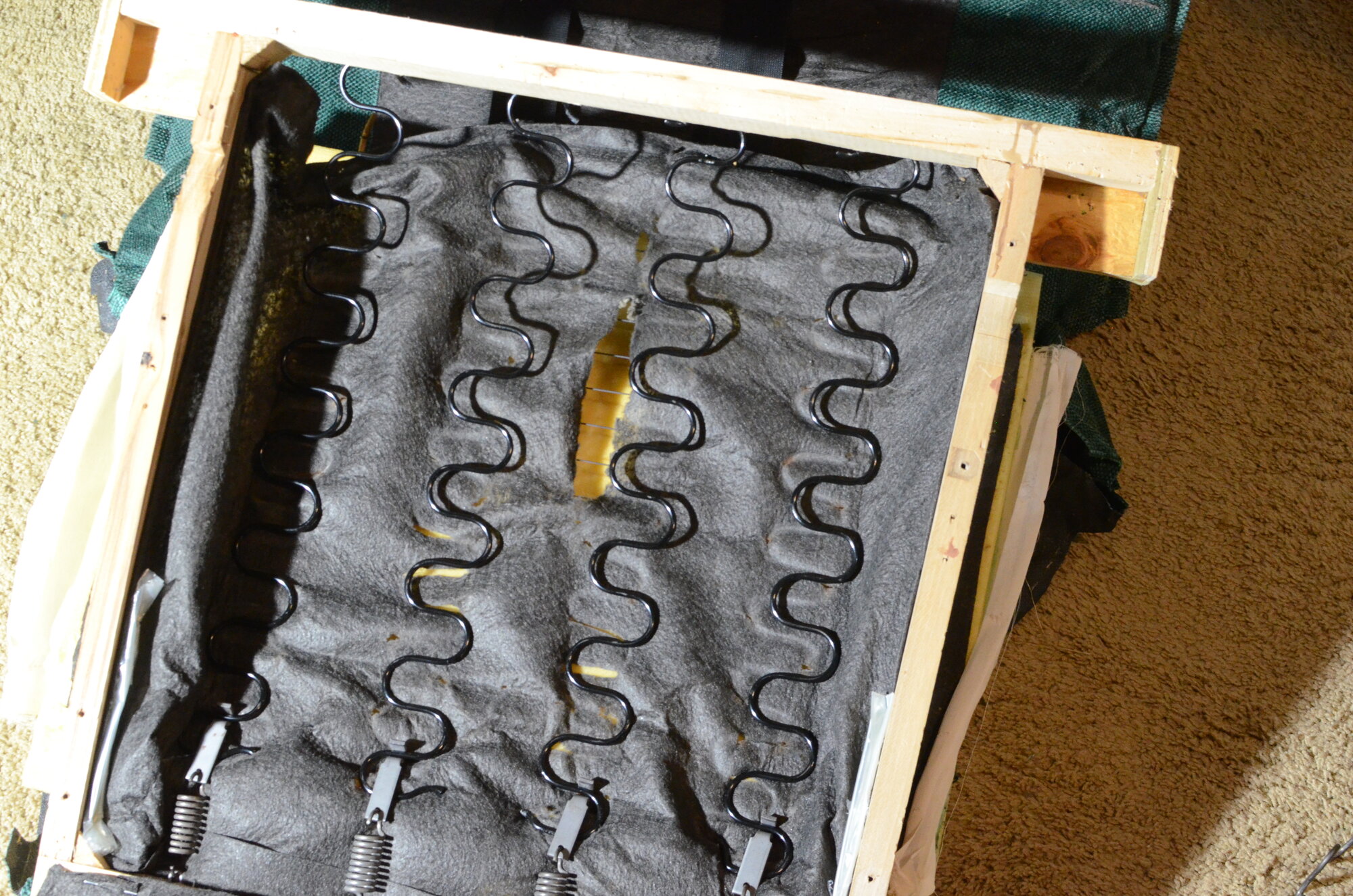
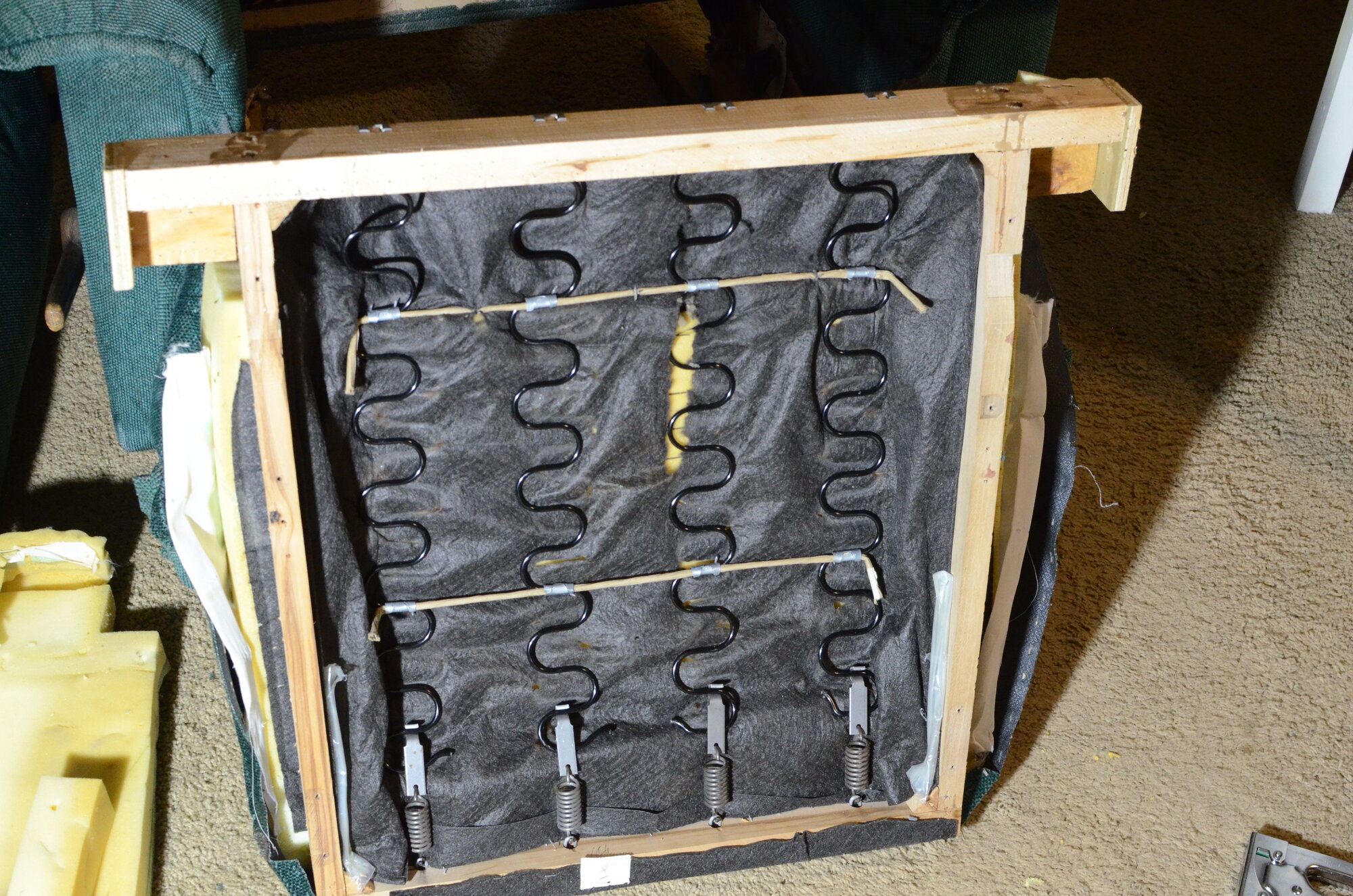
So far, it's working out, but I don't know if I'd recommend doing this versus replacing the chair. The seat in this one was attached by fabric to the rest of the chair, so I had to do all the work on the floor. Apparently, some of these have a removable seat, which would be ideal for repairing.
Speakers:
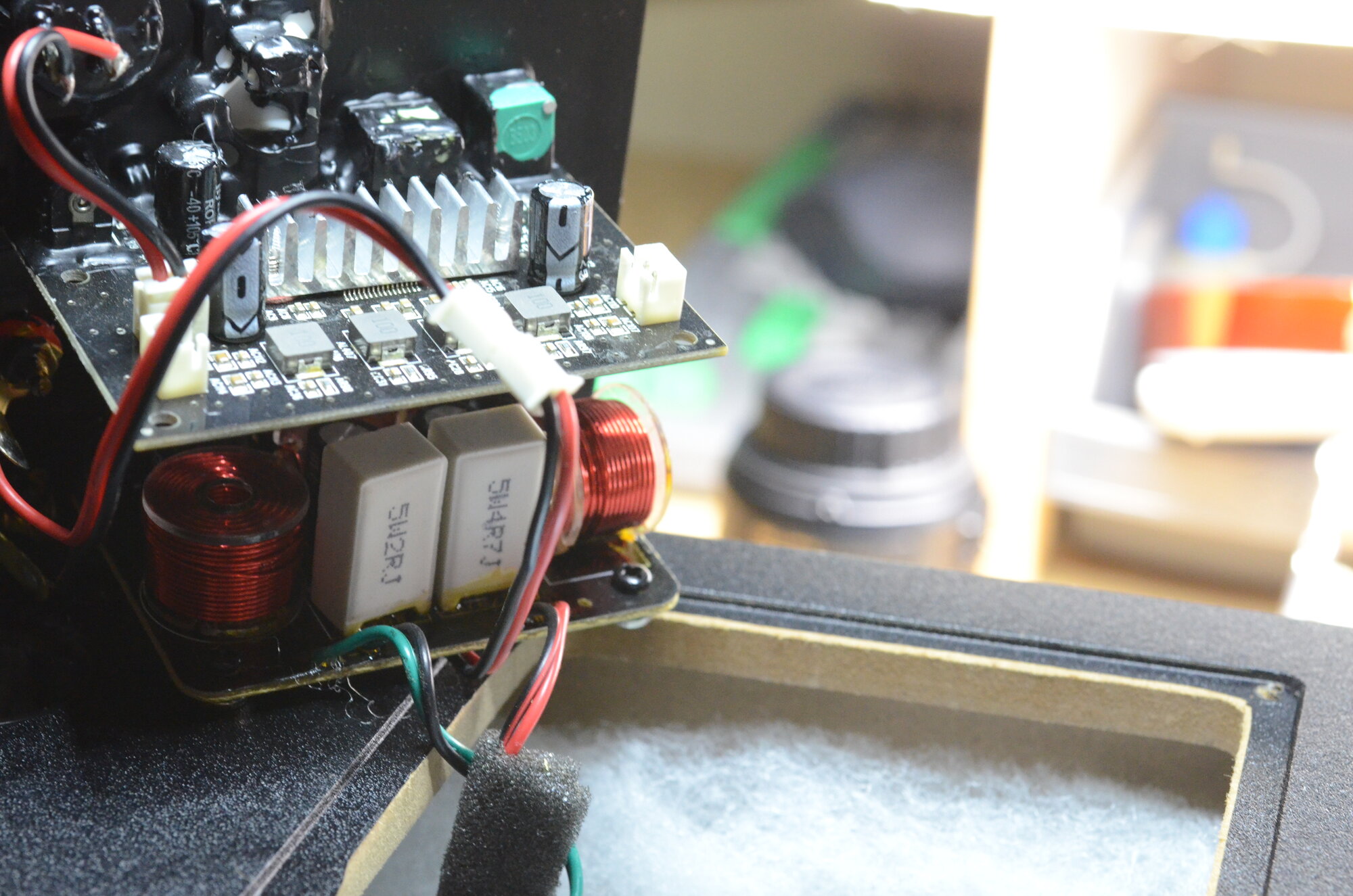
This next repair is turning a set of speakers with an integrated amplifier into a set of passive speakers. They started making a repeating 'popping' noise after being on for a few minutes.
I was able to troubleshoot the problem to an overheating amplifier chip. Putting a heat gun directly on the chip made the popping begin immediately.
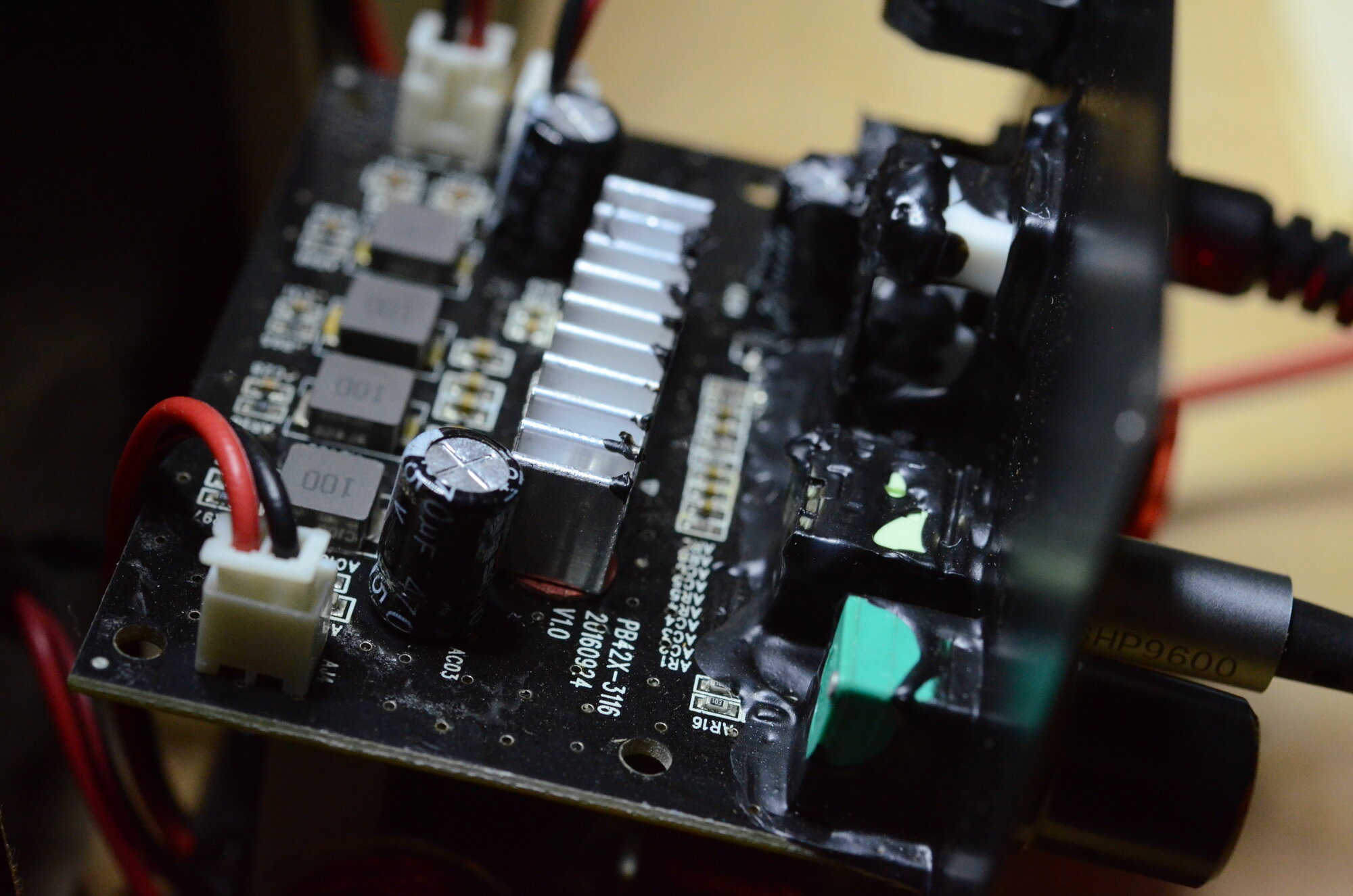
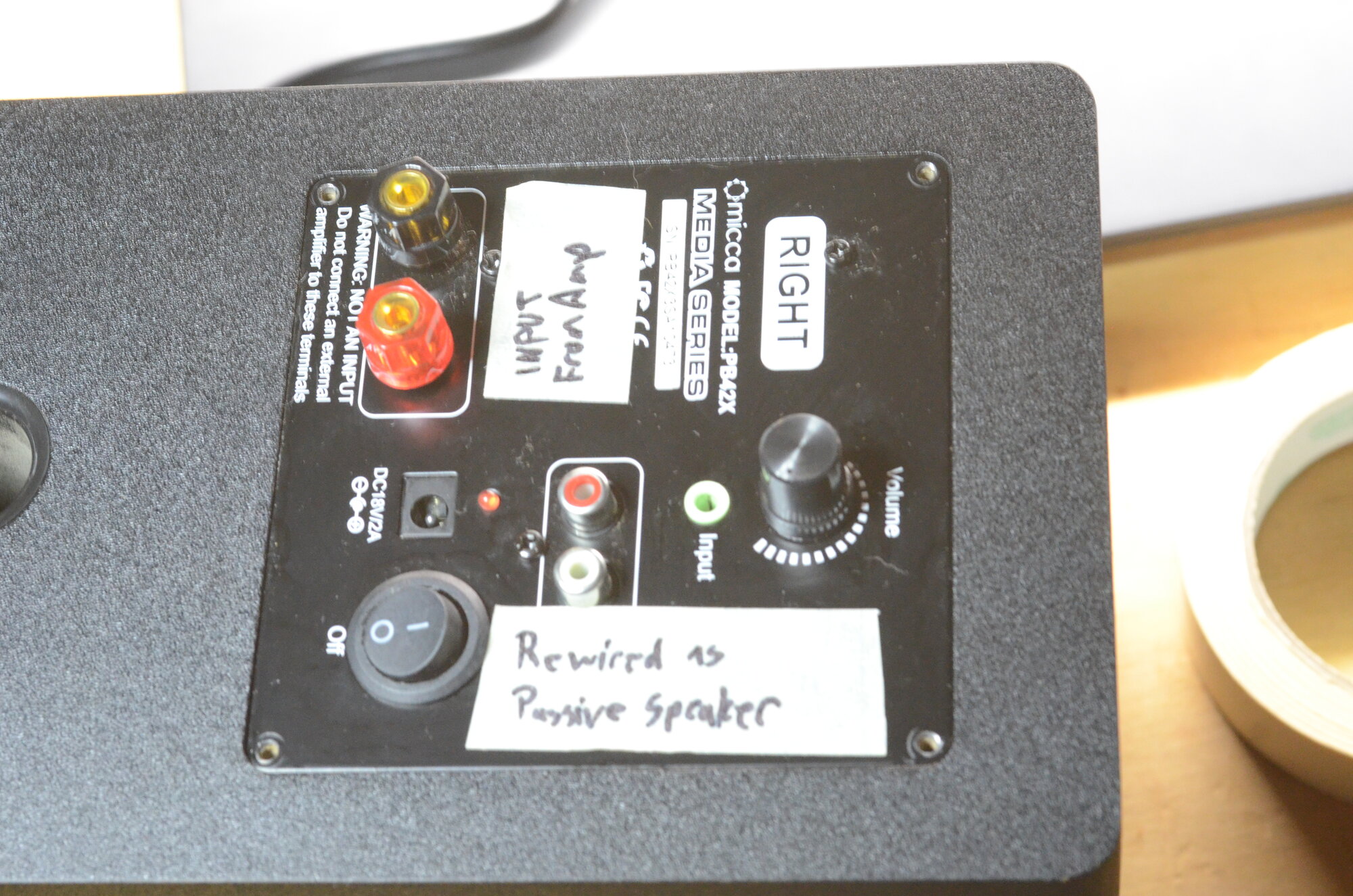
I did check with the manufacturer to see if I could buy just the replacement amplifier module because of all the glue sticking everything together. The lead spacing on the chip was also tiny, and I wasn't sure I would even be able to fix it. In the end, I went for the simplest option, and rewired the exising connection to pass an input from the speaker terminals to the crossover board.
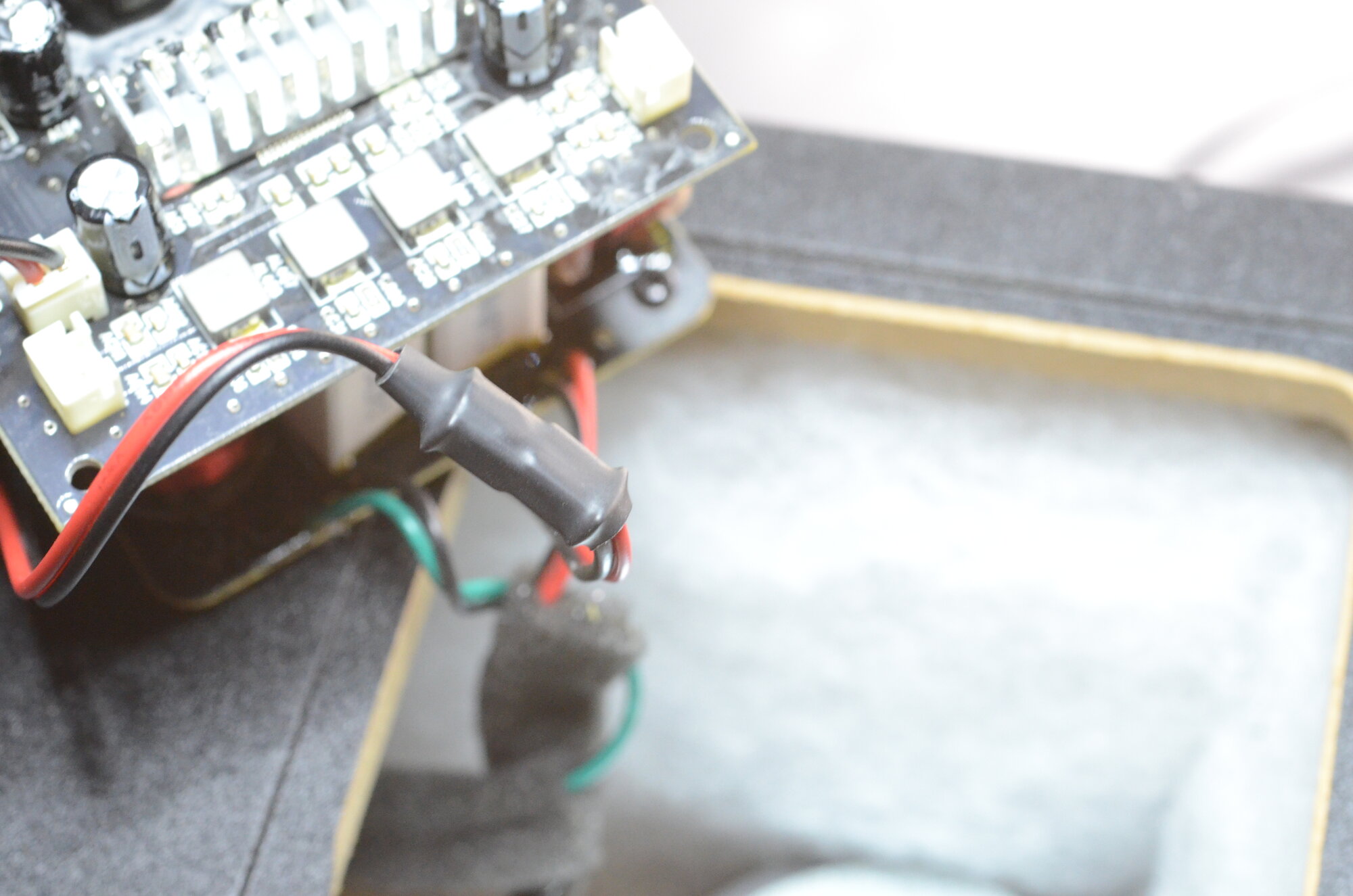
Then I added some helpful labels for my future self.
Old Phone:
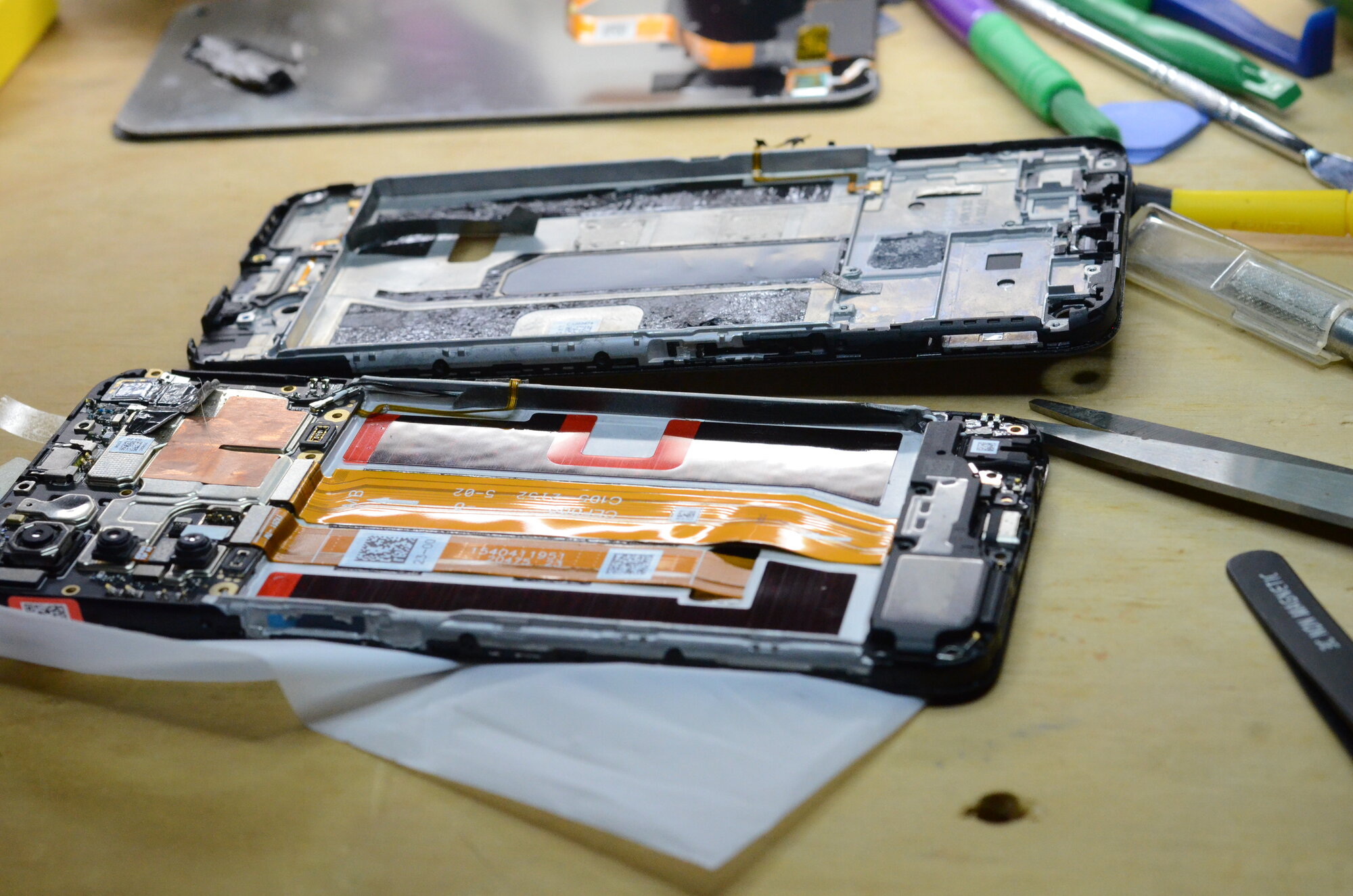
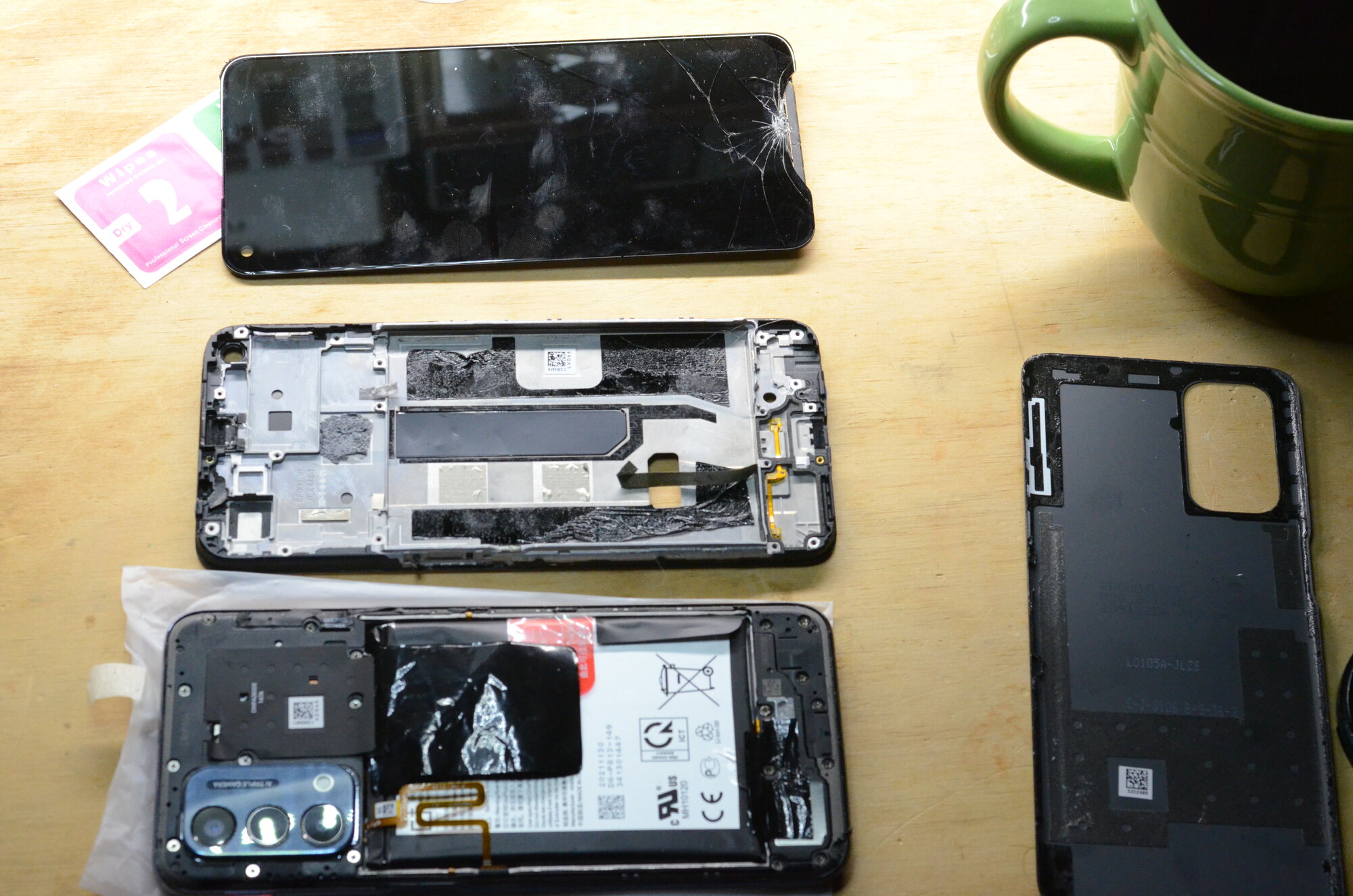
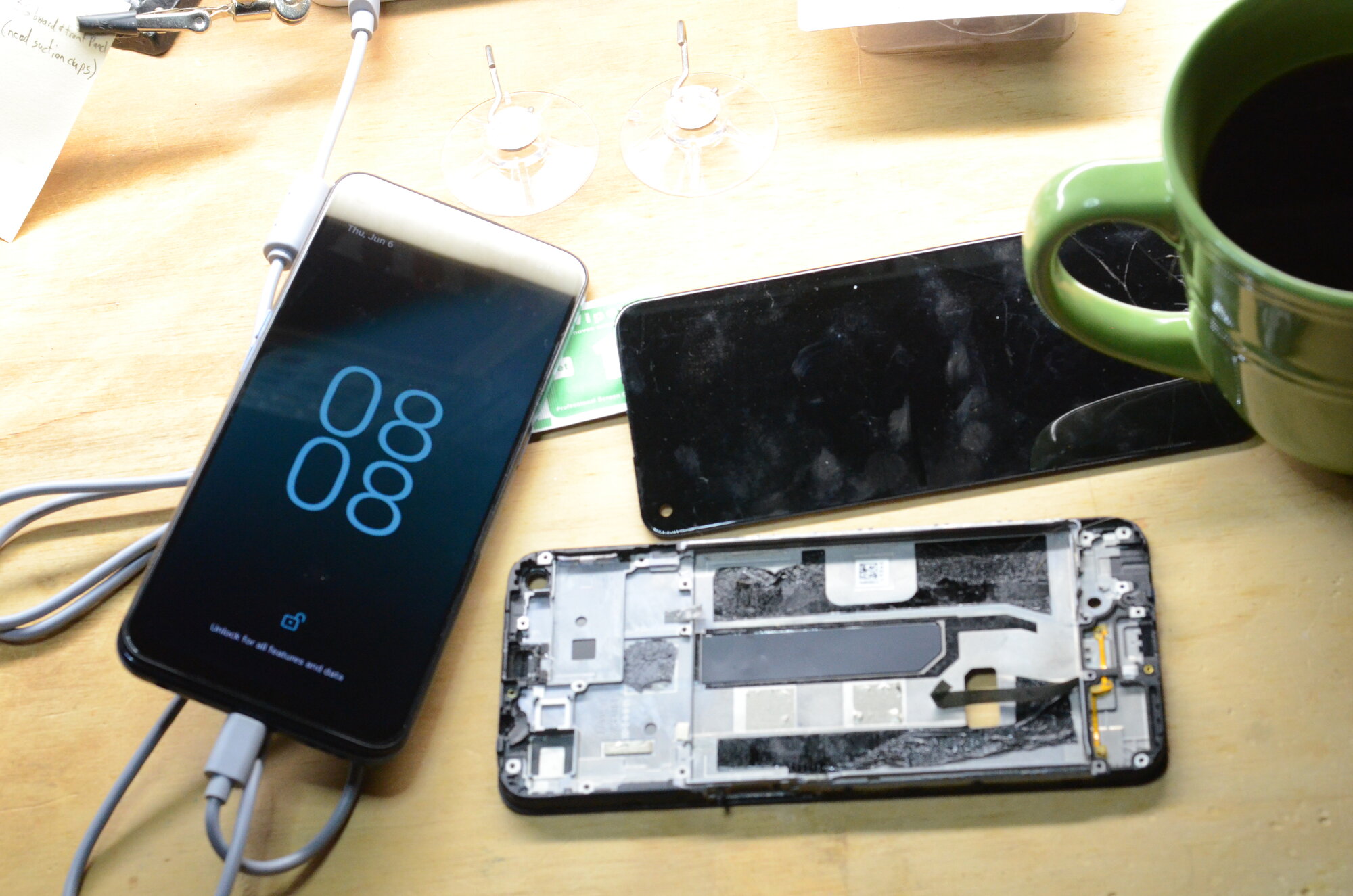
This is a OnePlus DE2117 with a broken screen. It took an unlucky bounce off a concrete floor, but the replacements were pretty cheap (~$20). I removed just the screen at first, before I realized the replacement contained the whole body structure too. Then it was removing the back cover, and carefully moving all the parts from the old phone into the new body. I don't know if I ordered the wrong part, but it would have been easier to replace just the screen.
Tablet:
This was the only repair that didn't go as planned. It's a lenovo M10 TB-606F, a pretty cheap android tablet with a nice screen.
Like the phone above it supports GSI Images , so can still be updated even after the vendor stops supporting it. That doesn't apply for the kernel though, which has vendor specific patches that don't get ported into the upstream linux kernel. What would be nice is if the chip manufacturers made an effort to support the chips, and the phone manufactures could use something like Device Trees to customize the features they used in the phones /rant.
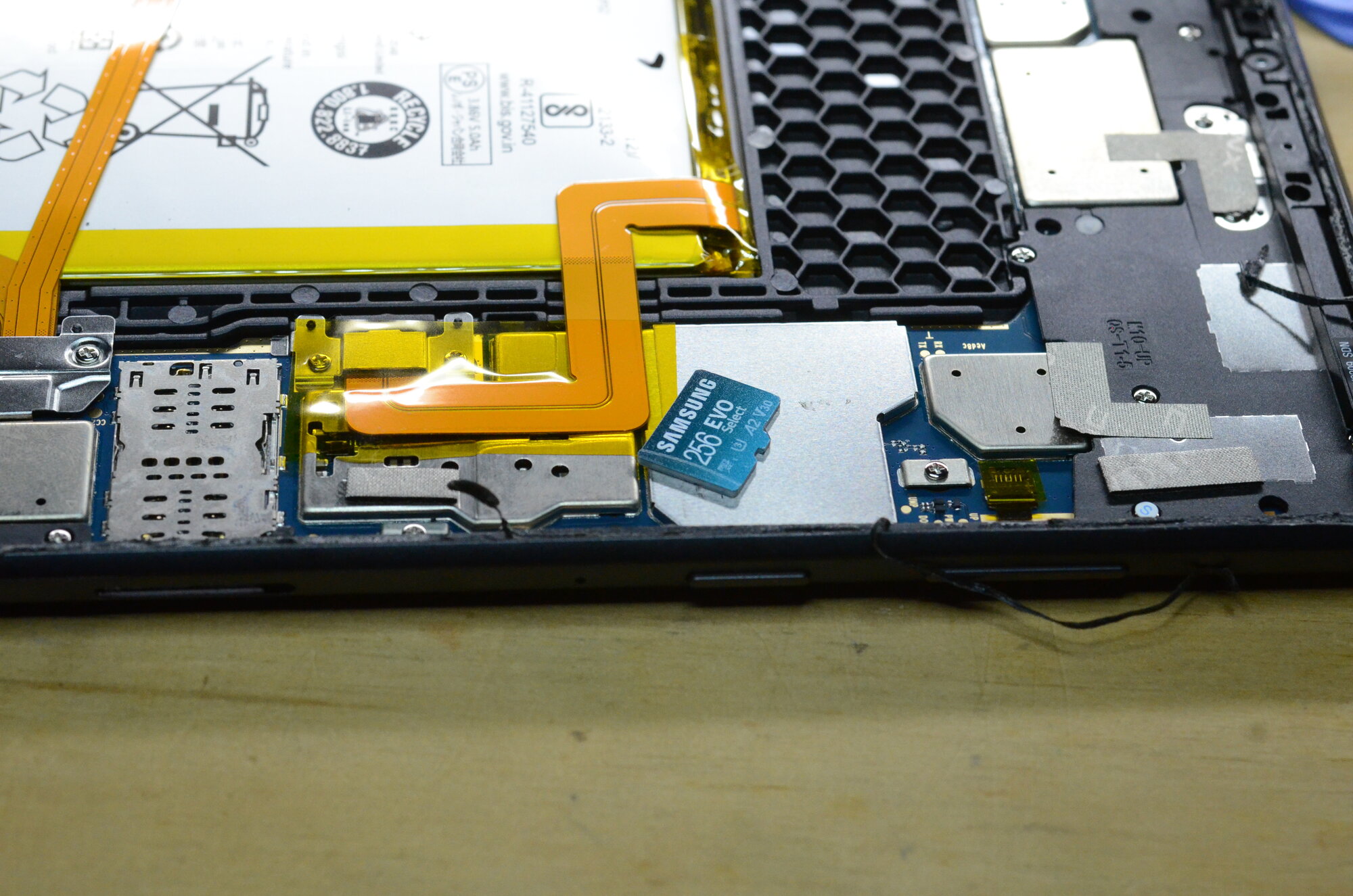
Anyway, somehow I managed to lose an SD card inside the tablet. This one comes apart all from the front by heating the glue and slowly working out the screen. It seemed to go fine, and I can't see any damage, but when I tried to turn the tablet back on there was no image. I don't know if I physically broke something, or somehow shorted the display connector when taking it off. I'm leaning toword the latter because I did have the battery still connected when removing the screen. I bought a used replacement for $50, which turns out to be about the cost of a replacement SD card, so thanks global chip shortage, I guess?
Dell laptop keyboard:
This one was is replacing a keyboard on a dell lattitue e7470 that began not registering keypresses. This went pretty smoothly, and was nice not to have to deal with the glue from the phone and tablet. A suprising number of screws holding the keyboard in place though.
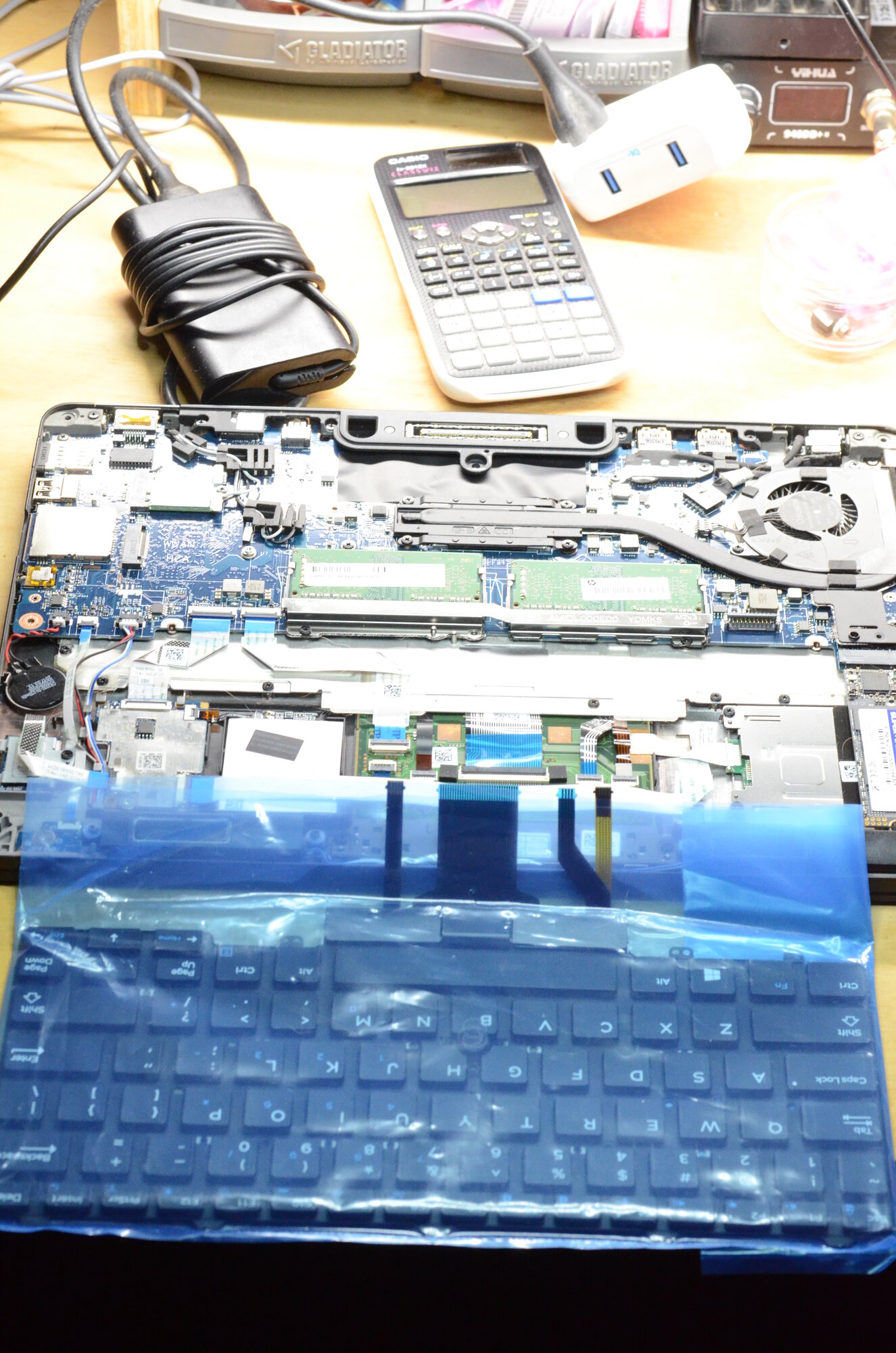
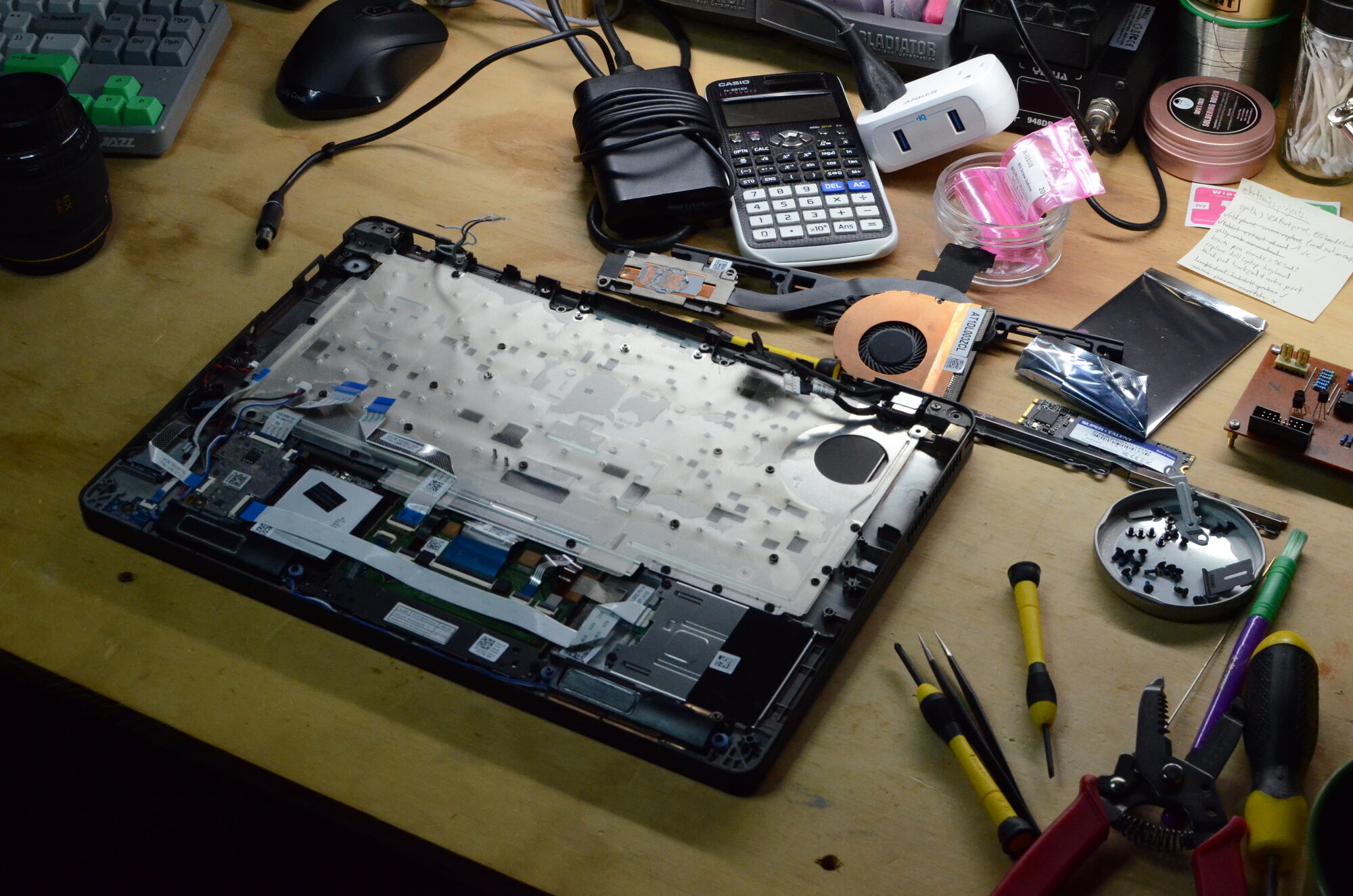
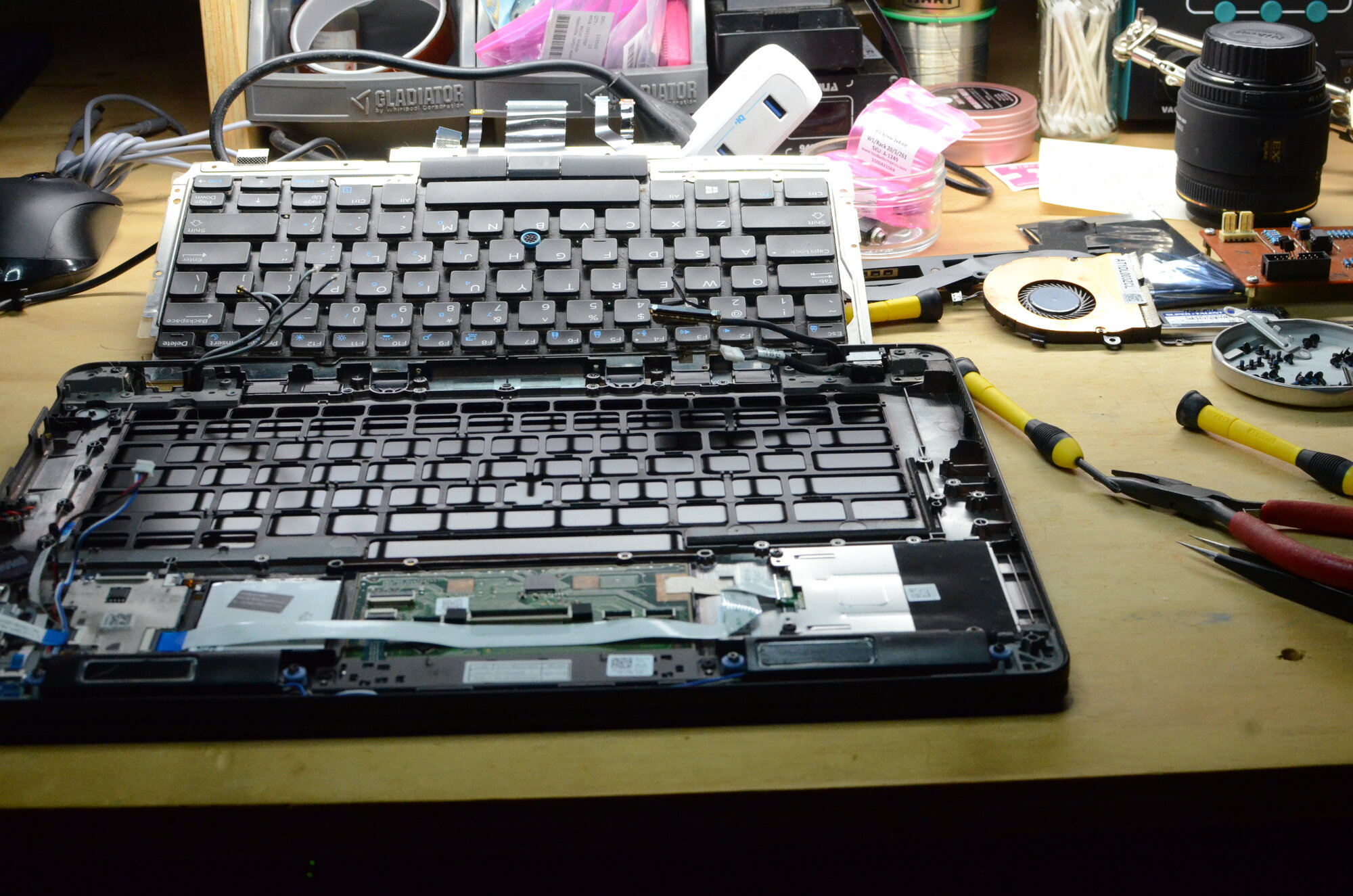
Adding some fresh heatsink compound since the heatsink was off:
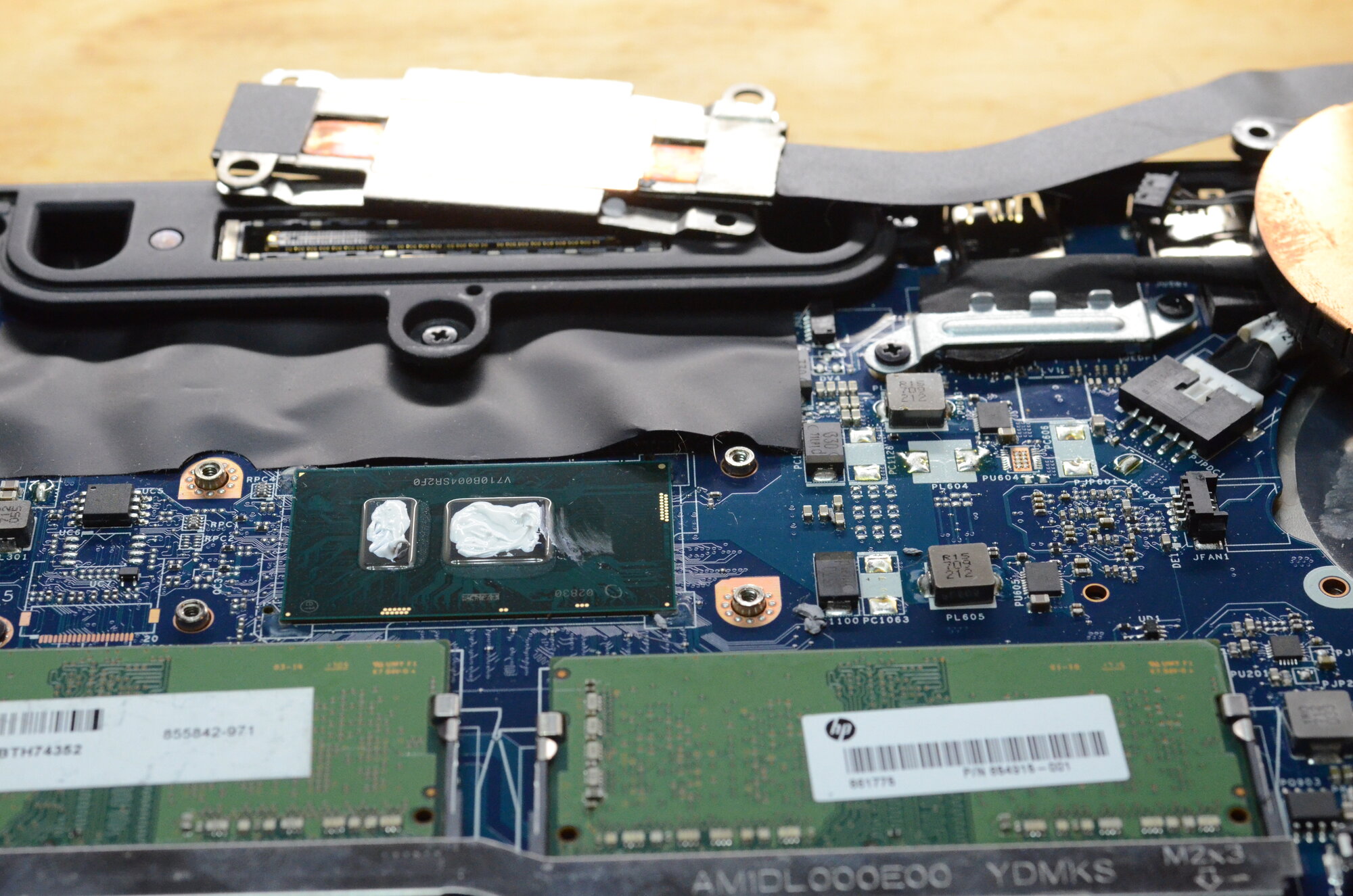
Thinkpad Trackpad:
Finally we have a fix for laptop I actually still use. I never got used to the thinkpad 'nipple', and the coating on the trackpad has worn down making it harder to use. This one was also very easy, just 4 screws and one flat flex cable:
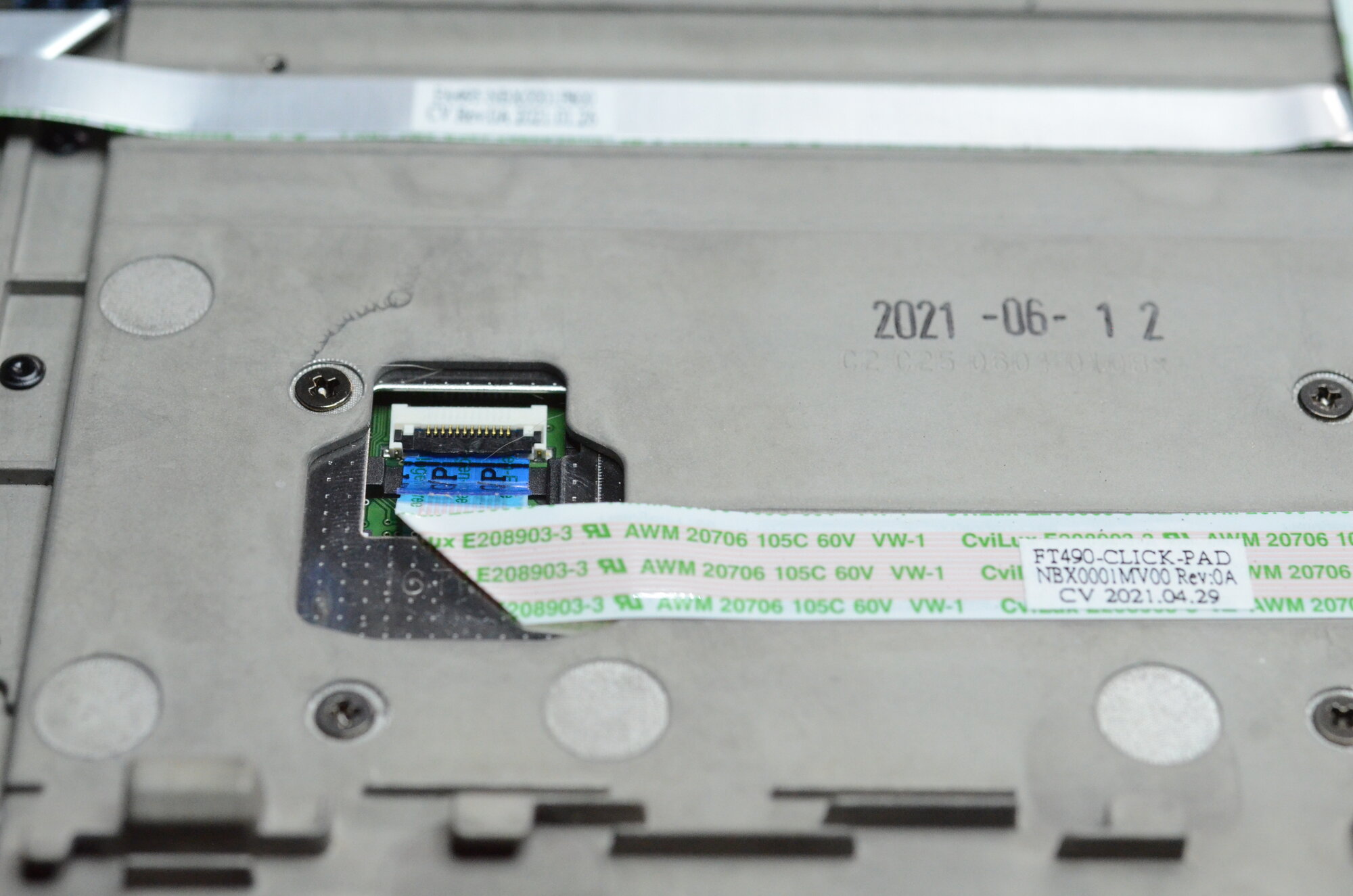
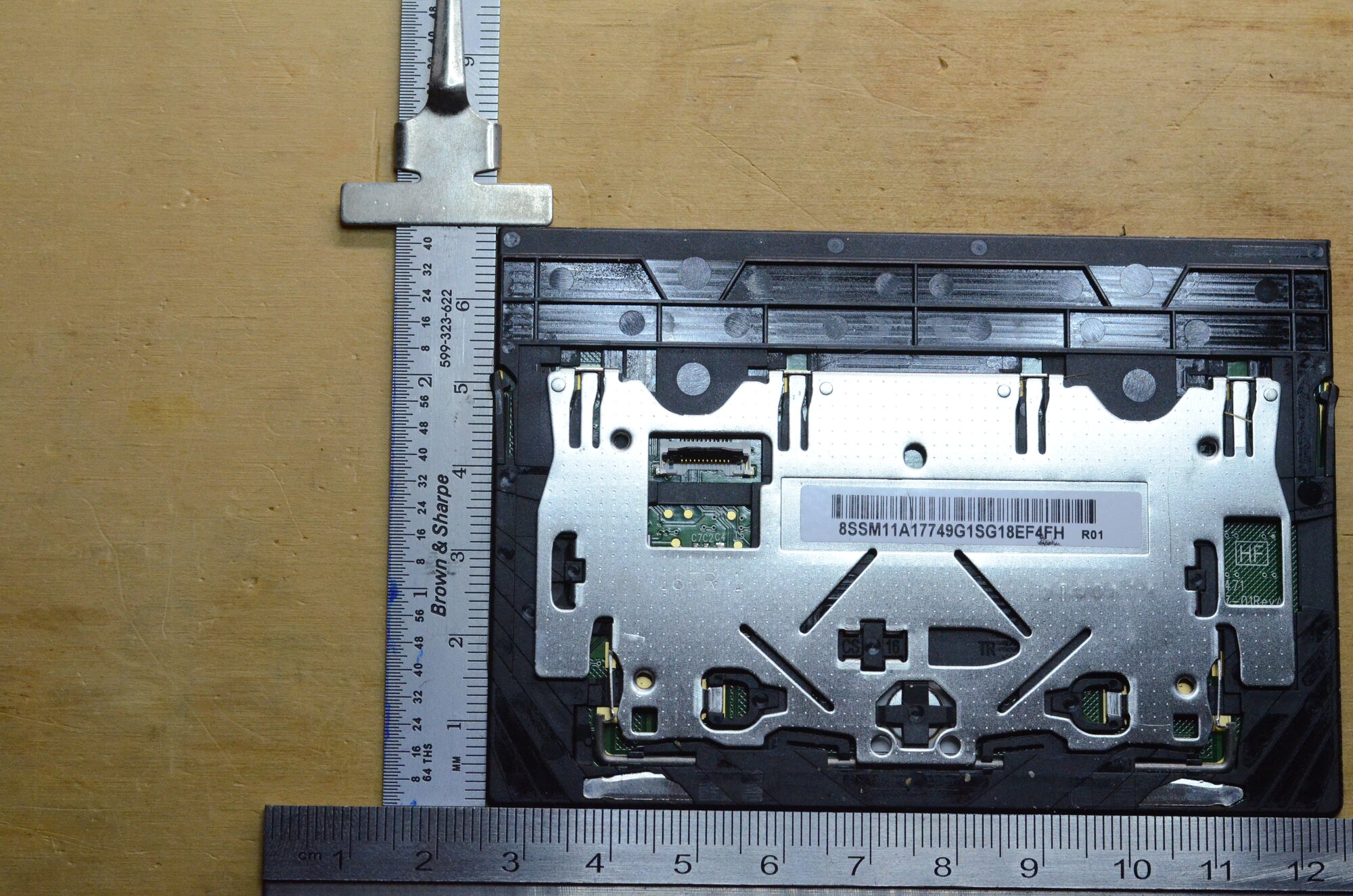
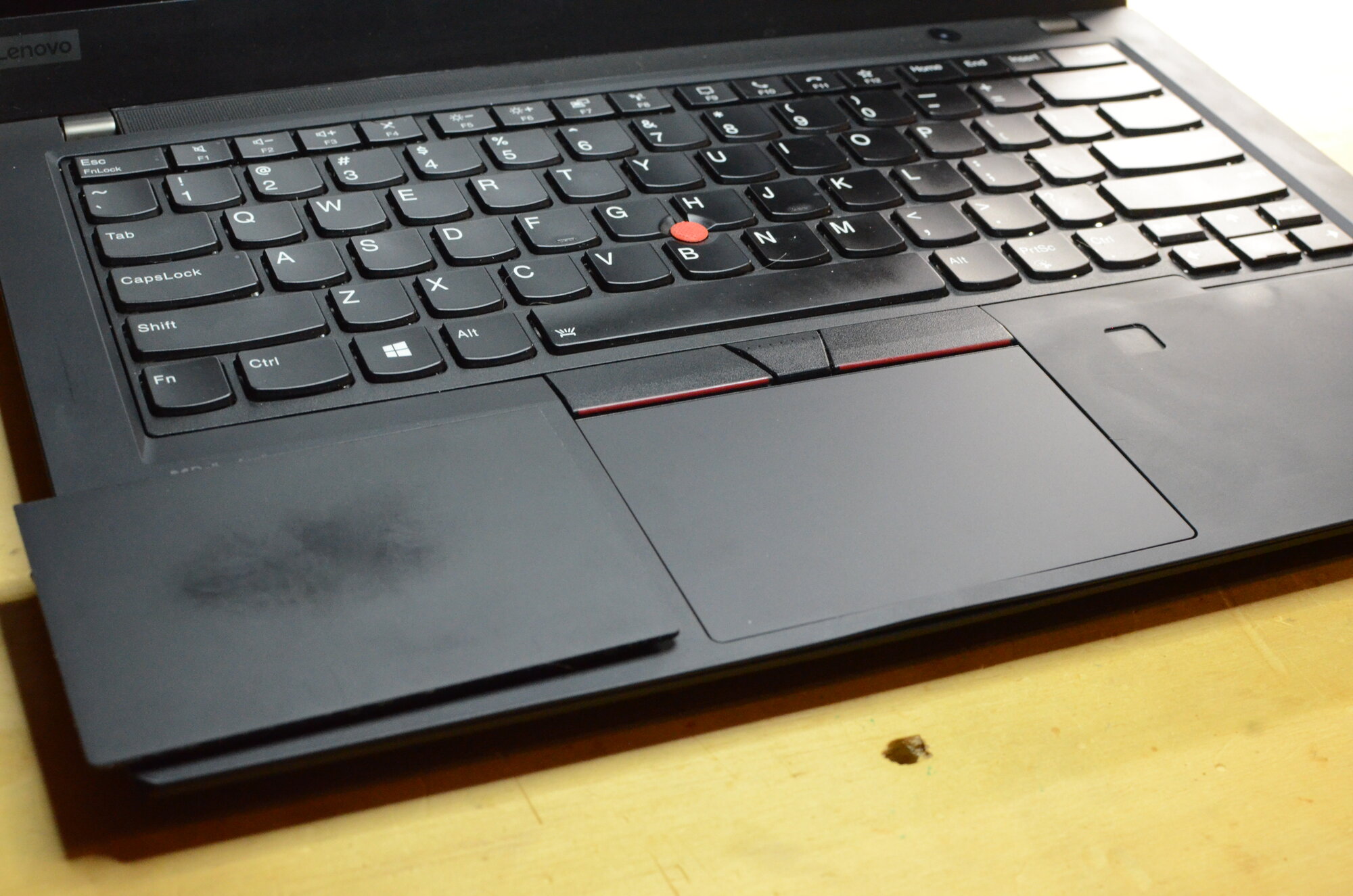
There is also a loose connection on the usb-c port I use for charging, but I didn't like my chances of fixing this one. I think it would be possible, but I would need to buy a heating pad, and maybe a hot-air station. Meanwhile, there's another port I can use for charging.
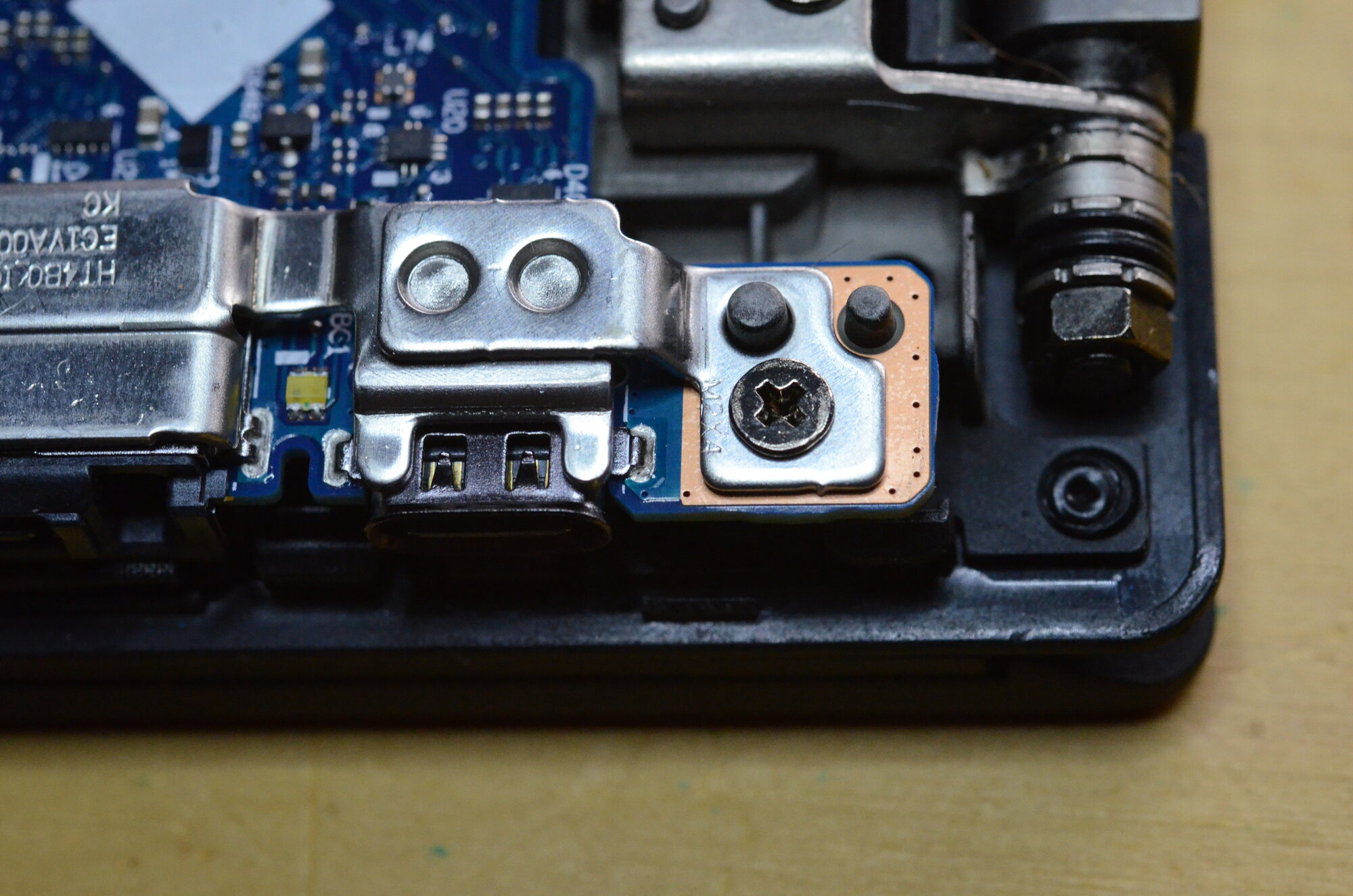
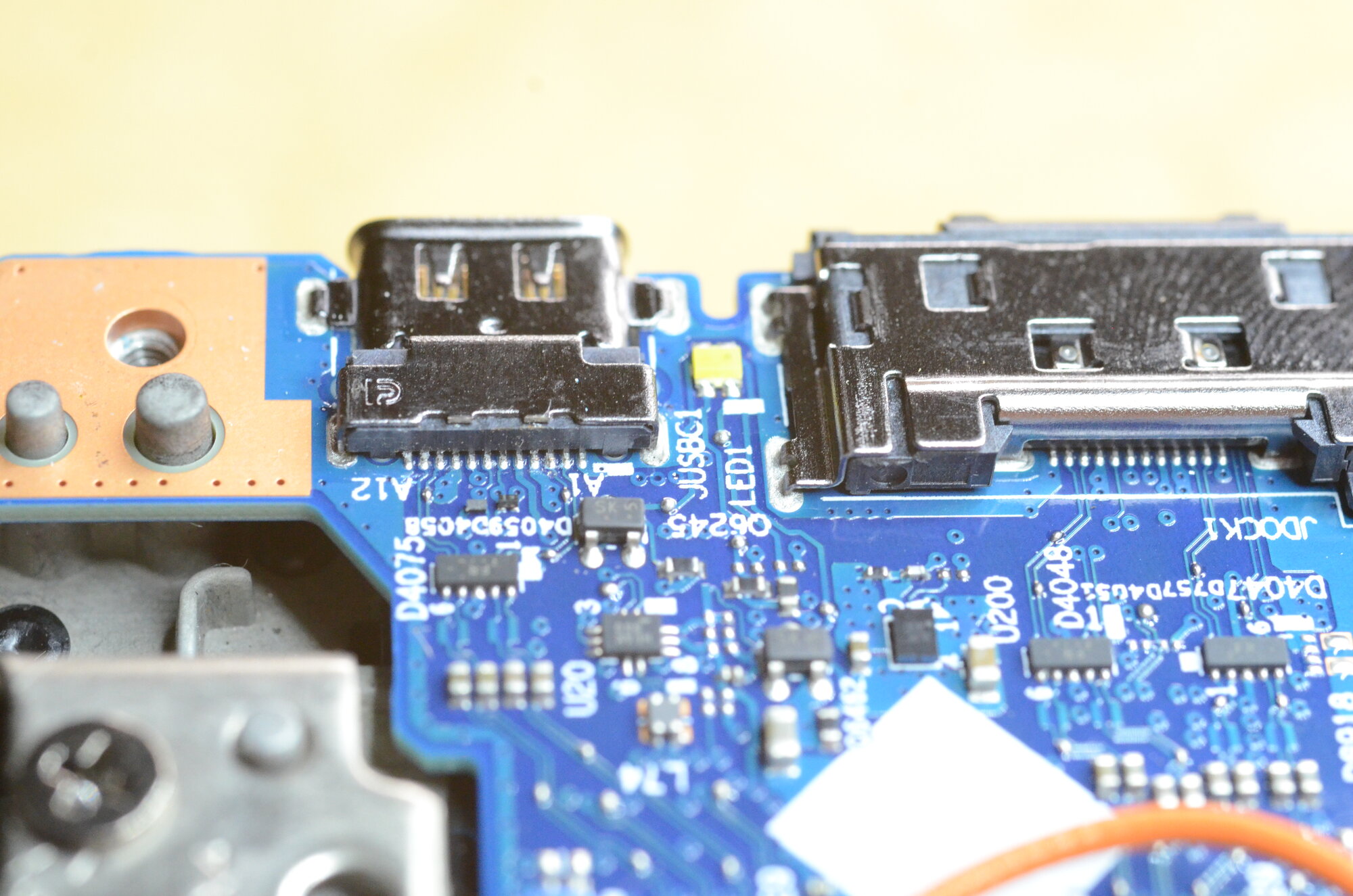
That's it for this episode. See you in another 3 years! But, hopefully not really, because I have some more electronics projects I would like to post about.